Chargeback vs Showback for Data Teams – Which Model Actually Changes Behavior


The chargeback vs showback debate has been running in cloud FinOps circles for years. In 2026, it’s arrived squarely in the data engineering world – and the stakes are higher than they were for generic cloud infrastructure.
Most data platform FinOps initiatives start the same way. Someone pulls a Snowflake bill, notices the number is large, and decides the fix is visibility. They build a dashboard, tag some warehouses, then send a monthly cost summary to team leads.
Six months later, the bill is the same.
The problem isn’t the dashboard. It’s the model. Visibility alone doesn’t change behavior – accountability does. And the gap between showing teams what they spent and making them responsible for it is wider than most platform leads expect.
A Snowflake warehouse doesn’t map cleanly to a cost center. A pipeline doesn’t have an owner tag by default. A data product can be consuming 40% of your compute with no team aware it’s theirs to optimize. That’s why data team cost accountability requires a data-native approach – not a generic cloud FinOps model retrofitted onto a warehouse.
Here’s what actually works.
Table of Contents
-
Phase 1: Visibility – The Foundation of Data Platform Cost Accountability
-
Phase 2: Showback – Transparency Without Financial Consequence
-
Phase 3: Chargeback – When Data Teams Start Owning Their Costs
-
Why Generic FinOps Tools Fail at Data Team Cost Accountability
TL;DR
- Chargeback vs showback – the choice between internally billing teams for compute vs. showing them costs without financial consequence
- Showback raises awareness but rarely changes spending patterns under delivery pressure
- Chargeback changes behavior but requires granular attribution and organizational readiness
- Most data teams should implement showback first, then transition to chargeback in phases
- Neither model works without pipeline-level attribution – warehouse tagging alone isn’t sufficient
- Seemore provides the query-level attribution layer that makes both models accurate and trustworthy
What Is Chargeback vs Showback? Key Definitions
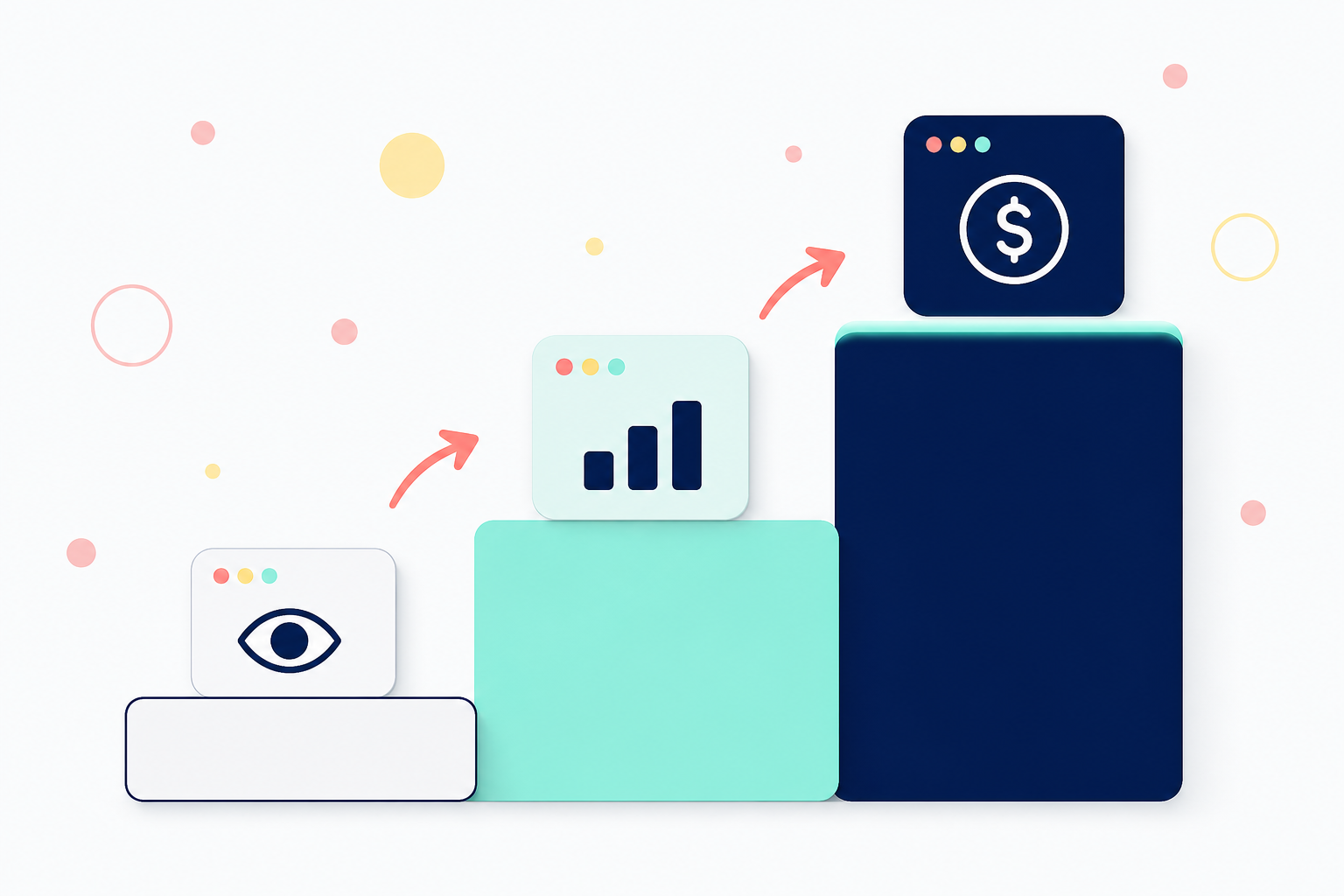
Showback is a cost visibility model where teams are shown their allocated data platform costs – compute, storage, query execution – without any direct financial consequence. It’s informational.
Chargeback is a cost accountability model where teams are internally billed for the data infrastructure they consume. Their cost footprint hits their actual budget.
The distinction matters enormously for behavior. Showback creates awareness. Chargeback creates ownership.
| Showback | Chargeback | |
|---|---|---|
| What teams see | Cost allocation report | Internal invoice |
| Financial consequence | None | Real budget impact |
| Behavior change | Moderate | High |
| Implementation complexity | Low–Medium | Medium–High |
| Requires executive buy-in | No | Yes |
| Best for | Early-stage, awareness building | Mature platforms with defined ownership |
| Works without pipeline attribution | No | No |
| Dispute risk | Low | High without trusted attribution |
Phase 1: Visibility – The Foundation of Data Platform Cost Accountability
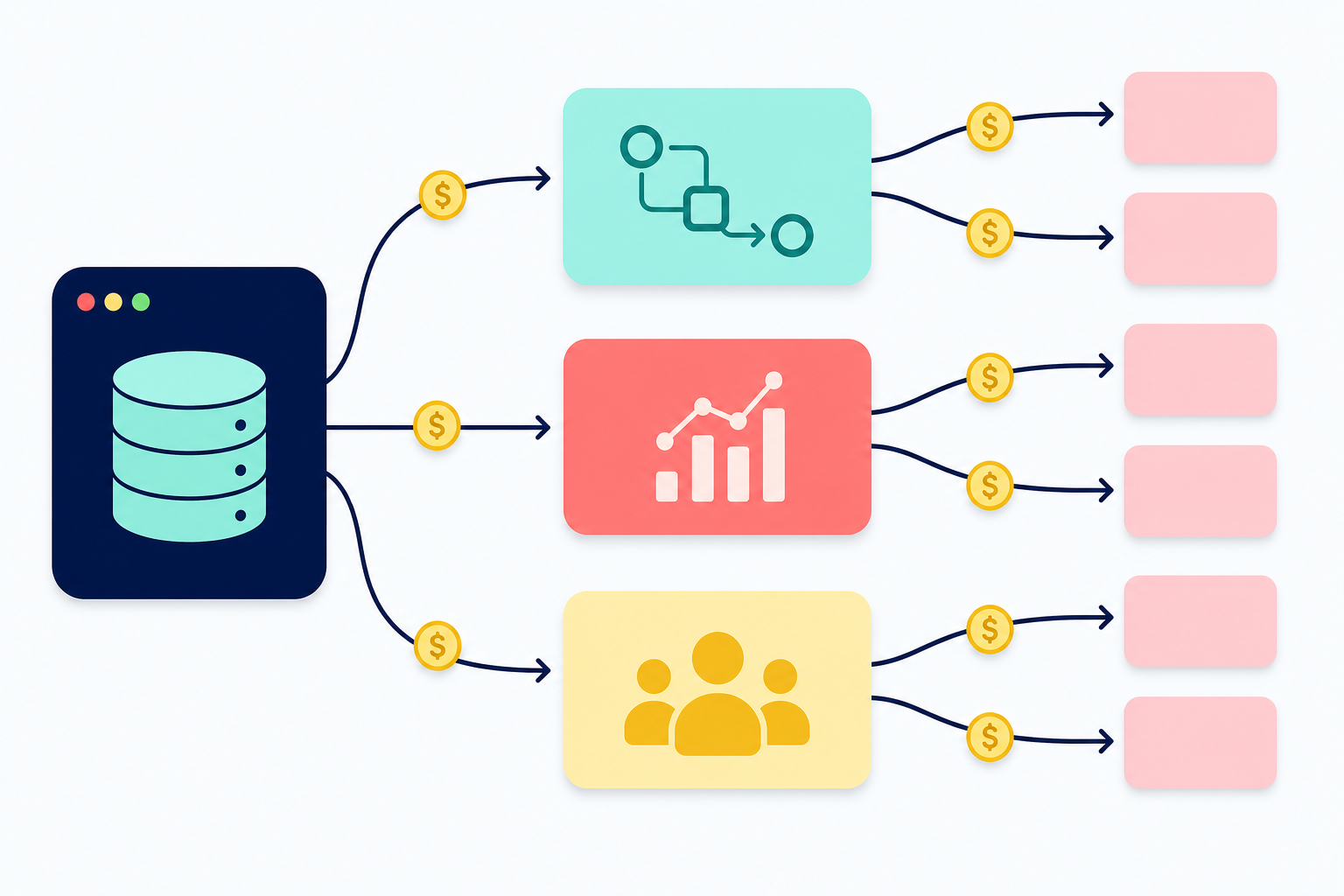
Before implementing either model, you need granular cost visibility at the workload level. Not “Snowflake costs us $X this month” – that’s an invoice, not intelligence.
Real visibility means knowing cost by warehouse, by pipeline, by team, by data product. It means understanding that 60% of your Snowflake spend comes from three pipelines owned by one team – and that those pipelines haven’t been optimized since they were first built.
Most data teams skip this phase. They move straight to tagging warehouses by team name and calling it attribution. The problem: a tag on a warehouse tells you which team owns the compute, not which pipeline, job run, or data product caused a specific cost spike. When a Snowflake cost increase occurs, you still can’t trace it.
Phase 1 requires:
- Query-level cost tracking – not just warehouse-level aggregates
- Pipeline-to-warehouse mapping with persistent identifiers
- A cost baseline per pipeline so anomalies are detectable
- Attribution that survives pipeline refactors and warehouse changes
- dbt job tagging and orchestrator-level cost metadata
This is the foundation that makes both showback reports and chargeback invoices trustworthy. Without it, teams dispute the numbers, the model loses credibility, and the entire FinOps for data engineering initiative stalls.
Phase 2: Showback – Transparency Without Financial Consequence
Showback is the practice of sharing cost allocation reports with the teams that own each pipeline, warehouse, or data product – without internal billing or budget impact.
For teams that have never seen their own Snowflake cost footprint, showback is genuinely effective in the short term. A data scientist who didn’t know their exploratory queries were running on an XL warehouse will often change behavior when they see the cost – not because they have to, but because the waste is visible.
The ceiling on showback is that it relies on intrinsic motivation. When cost reduction competes with delivery pressure, delivery wins every time.
What showback does well:
- Builds cost literacy across teams with no prior visibility into Snowflake cost allocation by team
- Creates the trust and data quality baseline needed before chargeback
- Surfaces quick wins – teams self-optimize obvious waste when they see it
- Low organizational friction – no internal billing politics, no executive mandate required
- Aligns with the FinOps Foundation’s “inform” phase before teams are ready to “optimize”
Where showback falls short:
- Doesn’t drive behavior change in teams under sustained delivery pressure
- Provides no mechanism for platform teams to recover infrastructure costs from heavy users
- Can generate awareness without action for quarters or years
- Waste from AI agent workloads and runaway queries often persists because no team bears the financial cost
As the FinOps Foundation’s 2026 analysis makes clear, aggregate warehouse spend visibility is the starting point – not the destination. Pipeline-level granularity is what separates actionable showback from decorative dashboards.
Phase 3: Chargeback – When Data Teams Start Owning Their Costs
Chargeback for data teams means engineering and analytics teams are internally billed for the Snowflake credits, Databricks compute, and data infrastructure they consume. Their platform usage hits their budget. Cost optimization becomes a first-class engineering priority.
The behavioral change is measurable and durable. Teams that own a cost center push back on unoptimized pipelines. They ask for cost estimates before approving new data products. They notice when warehouse sizing doesn’t match workload requirements. The shift from “IT provides data infrastructure” to “we own our data costs” is a cultural change – and chargeback is the mechanism that makes it stick.
What chargeback requires to succeed:
- Granular, auditable attribution – teams will dispute bills they can’t verify at the query level
- Defined ownership boundaries – every pipeline and warehouse needs a clear owner before billing begins
- Executive alignment – data engineering leads and finance must agree on the model before rollout
- A showback baseline period – run showback for at least one full quarter so teams understand their cost profile before they’re billed for it
- A dispute resolution process – attribution errors will happen; teams need a clear escalation path
The most common failure mode: rolling out internal billing before attribution is accurate enough to withstand scrutiny. Teams receive cost allocations they can’t explain, disputes pile up, and the model collapses into organizational friction. The technical foundation has to be solid first.
Chargeback vs Showback: Which Model Is Right for Your Team?
The honest answer: it’s not a binary choice – it’s a maturity progression. Most teams should implement both in sequence.
Start with showback if:
- You don’t yet have pipeline-level cost attribution in place
- Your engineering teams have never seen their own Snowflake cost footprint
- Data product ownership isn’t clearly defined across your organization
- You’re in the first 12 months of a data platform FinOps program
Move to chargeback when:
- Pipeline-level attribution is granular, accurate, and trusted by the teams being billed
- Every major pipeline and data product has a defined owner
- Showback has run for at least one quarter with no significant attribution disputes
- Engineering leads and finance have aligned on the internal billing model
Stay on showback if:
- Your organization is still building an ownership culture around data products
- The political cost of internal billing outweighs the behavioral benefit at your current scale
The goal isn’t chargeback for its own sake. The goal is sustained behavior change. If showback is achieving measurable cost reduction, it’s the right model. If the same inefficient pipelines are still running six months later, chargeback is the next lever to pull.
Why Generic FinOps Tools Fail at Data Team Cost Accountability
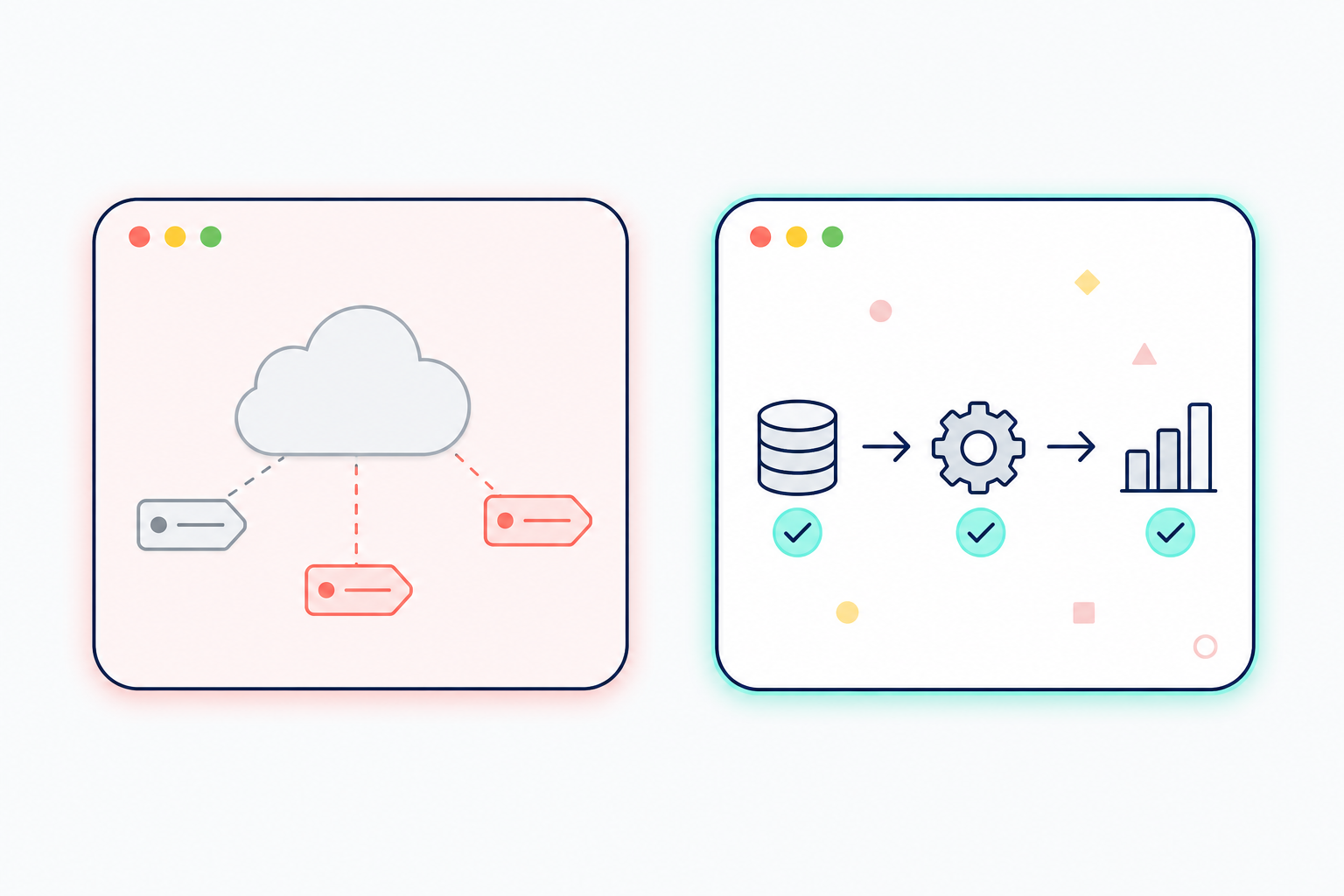
Standard cloud FinOps platforms – Apptio, Cloudability, AWS Cost Explorer, CloudZero – were built for infrastructure cost allocation. They understand EC2 instances, S3 buckets, and network egress. They allocate costs by tagging cloud resources.
However, what they don’t do is understand a Snowflake credit, a dbt model run, or a data product cost boundary.
The limitation surfaces immediately when you try to implement showback or chargeback on a Snowflake or Databricks environment using generic tooling. You can tag a warehouse by team name. You cannot automatically attribute the cost of a shared warehouse to the specific pipelines, job runs, and teams that consumed it – without workload-level intelligence that generic tools don’t have.
The result: cost reports that teams can’t act on because the granularity isn’t there, and chargeback disputes that nobody can resolve because the attribution doesn’t trace back to the query.
Data-native FinOps is a different category. It knows which queries belong to which pipeline. It tracks cost-per-pipeline-run over time so you can show a team not just what they spent this month, but whether their costs are trending up – and why.
Seemore is purpose-built for this layer. It instruments your Snowflake environment at the query level, automatically attributes costs to the pipeline, team, and data product that generated them, and produces the attribution data that makes both showback reports and chargeback invoices accurate enough to trust. No manual tagging of every warehouse. No custom cost allocation SQL. Continuous, automatic, workload-level intelligence – the foundation of any serious data platform FinOps program.
Frequently asked questions
What is the difference between chargeback and showback for data teams?
Showback is a cost visibility model where data teams see their allocated compute costs – Snowflake credits, Databricks job runs, pipeline execution – without any financial consequence. Chargeback is a cost accountability model where those costs are internally billed against team budgets. Showback builds awareness; chargeback drives behavior change. For data platforms, both require pipeline-level attribution to produce numbers that teams trust and act on.
How do you implement Snowflake cost allocation by team?
The most reliable method is query-level attribution: tracking which queries belong to which pipeline, and which pipeline belongs to which team or data product. Warehouse tags alone are insufficient for shared environments. A data-native cost intelligence platform like Seemore automates this attribution by mapping query fingerprints to workloads and workloads to owners – without requiring manual tagging of every query or job run.
Does showback actually reduce Snowflake spending?
Sometimes. Showback reliably surfaces quick wins – teams self-optimize obvious waste once they see the cost. But it rarely drives sustained behavior change under delivery pressure because there’s no financial consequence. If the same inefficient pipelines are still running after two quarters of showback reporting, internal chargeback is the next step.
What is FinOps for data engineering, and how is it different from cloud FinOps?
Cloud FinOps manages infrastructure costs at the resource level – instances, storage, network egress. FinOps for data engineering manages costs at the workload level – pipeline runs, query execution, Snowflake credit consumption per data product. The key difference is attribution granularity: shared data warehouses require workload-level cost intelligence that generic cloud FinOps tools cannot provide. This is why data-native platforms like Seemore are a distinct category from infrastructure cost management tools.