


New to the concept? Read our full guide on what is data observability before diving into the rankings.
Quick Summary: Top Picks for 2026
- Best Overall & Best for Snowflake Cost Optimization: Seemore Data
- Best for Large Enterprise & Legacy Stacks: Monte Carlo
- Best for Multi-Layered Infrastructure Observability: Acceldata
- Best for Customizable Data Quality Monitoring: Bigeye
- Best for Data Contracts and Code-First Checks: Soda
- Best for Fast-to-Deploy Observability: Metaplane (now part of Datadog)
- Best for ETL/ELT Pipeline Observability: IBM watsonx.data integration (formerly Databand)
- Best for Code-First Data Validation: Great Expectations
- Best for Data Governance & Compliance: Informatica CDGC
- Best for Real-Time Streaming Anomaly Detection: Lightup
Data Observability Software Comparison
| Tool | Best For | AI Root-Cause Analysis | Snowflake Cost Optimization | Data Lineage | Deployment | Starting Price | Free Trial |
|---|---|---|---|---|---|---|---|
| Seemore Data | Snowflake cost-aware observability & autonomous optimization | ✓ | ✓ | ✓ | SaaS / Snowflake Native | Free warehouse scan | ✓ |
| Monte Carlo | Large enterprise data reliability | ✓ | ✗ | ✓ | SaaS | Custom | ✗ |
| Acceldata | Multi-layered infrastructure observability | ✓ | ✓ (partial) | ✓ | SaaS / Hybrid | Custom | ✗ |
| Bigeye | Customizable data quality monitoring | ✓ | ✗ | ✓ (partial) | SaaS | Custom | ✓ |
| Soda | Data contracts and code-first validation | ✓ (limited) | ✗ | ✓ (partial) | SaaS / Self-hosted | Free (source-available); from ~$1,000/mo | ✓ |
| Metaplane (now Datadog) | Fast-to-deploy observability | ✓ | ✗ | ✓ | SaaS | From ~$1,000/mo | ✓ |
| IBM watsonx.data integration (formerly Databand) | ETL/ELT pipeline observability | ✓ | ✗ | ✓ | SaaS / Hybrid | Custom | ✗ |
| Great Expectations | Code-first data validation | ✗ | ✗ | ✗ | Self-hosted / SaaS (Cloud) | Free (OSS); GX Core only | ✓ |
| Informatica CDGC | Data governance & compliance | ✓ | ✗ | ✓ | SaaS / Hybrid | Custom | ✗ |
| Lightup | Real-time streaming anomaly detection | ✓ | ✗ | ✓ (partial) | SaaS / Self-hosted | Custom | ✓ |
How We Selected and Ranked These Tools
We reviewed 27 data observability platforms before narrowing this list to 10. Evaluation criteria included: anomaly detection accuracy and MTTD reduction, data lineage depth (field-level vs. table-level), Snowflake and Databricks native integration, cost control and FinOps capabilities, pricing transparency, deployment flexibility, and verified customer reviews from G2’s Data Observability category and Gartner Peer Insights. Data sources include vendor documentation, hands-on testing in Snowflake environments, and Gartner Market Guides for Data Observability.
Tools were scored across all criteria and ranked accordingly. Seemore Data is our own product. We ranked it #1 based on its unique combination of root-cause anomaly detection and autonomous cost control in a single Snowflake-native agent – a capability no other tool on this list replicates end-to-end.
The 10 Best Data Observability Software Tools for 2026

1. Seemore Data – The Autonomous Data Efficiency AI Agent for Snowflake
Data observability software with anomaly detection and cost control
Overview: Seemore Data is a Snowflake-native autonomous AI agent that combines data observability with continuous cost control in a single platform. Unlike
traditional observability tools that stop at detection, Seemore closes the loop with autonomous remediation. It is purpose-built for data teams that run Snowflake as their primary warehouse and need to manage both pipeline reliability and compute spend without adding headcount.
Key Features
- Autonomous root-cause analysis – detects anomalies in Snowflake pipelines and immediately surfaces the root cause, reducing MTTD and MTTR without manual investigation. Explore finding the root cause of broken data.
- Continuous Snowflake cost optimization – monitors warehouse credit consumption in real time and autonomously right-sizes warehouse configurations, eliminating idle spend and credit waste. See autonomous warehouse optimization.
- Usage-based pipeline optimization – identifies underused, over-provisioned, or redundant pipelines and surfaces actionable recommendations. Details: usage-based pipeline optimization.
- Data waste elimination – maps and flags data assets generating cost with no downstream consumption, enabling teams to cut storage and compute spend at the source. See eliminating data waste.
- Snowflake Marketplace native – deploys directly from the Snowflake Marketplace; no data leaves your Snowflake environment, satisfying security and
compliance requirements out of the box. - Query-level data lineage – tracks lineage at the query and object level, enabling full impact analysis before schema changes or pipeline modifications.
Best For: Data engineering teams on Snowflake that need observability and FinOps in one agent – particularly fast-scaling SaaS and media companies where Snowflake bills spike unpredictably, and root-cause investigation consumes engineering hours. See what Seemore did for Paychex in the Snowflake cost optimization case study.
Pricing: Free warehouse scan available. You can also install directly on Snowflake Marketplace.
Pros
- Combines anomaly detection with autonomous cost remediation for Snowflake in a single native agent
- Zero-data-egress deployment via Snowflake Marketplace – no security review overhead
Cons
- Optimized for Snowflake; not designed for teams running simultaneous multi-warehouse stacks
- Newer to market than Monte Carlo or Informatica – smaller ecosystem of third-party integrations
2. Monte Carlo – Best for Large Enterprise & Legacy Stacks
The enterprise-grade data reliability platform.
Overview: Monte Carlo is one of the most established data observability platforms on the market. Built for large, complex data environments, it delivers
end-to-end lineage, ML-powered anomaly detection, and deep integrations across modern and legacy stacks. It is a strong fit for enterprises with sprawling pipelines across Snowflake, Databricks, BigQuery, and Airflow.
Key Features
- ML-powered anomaly detection across tables, columns, and pipelines – no threshold configuration required
- Field-level data lineage from source to BI dashboard, enabling precise root-cause tracing
- Native integrations with dbt, Airflow, Looker, Tableau, Snowflake, Databricks, and BigQuery
- Automated incident management with Slack and PagerDuty routing
Best For: Large enterprises with mature data stacks, dedicated data reliability teams, and complex multi-system lineage requirements across heterogeneous
warehouses and lakehouse architectures.
Pricing: Custom / Contact sales
Pros
- Best-in-class lineage depth across heterogeneous stacks
- Strong enterprise sales motion with dedicated CSM support
Cons
- No autonomous cost optimization or FinOps capabilities
- Pricing is opaque – cost-per-table model scales expensively at high volume
3. Acceldata – Best for Multi-Layered Infrastructure Observability
Observability across data, pipelines, and the infrastructure underneath.
Overview: Acceldata differentiates itself by monitoring not just data quality and lineage, but also the compute infrastructure and pipeline performance beneath
the data layer. It is built for enterprises running hybrid environments – on-premise Hadoop alongside Snowflake or Databricks – where infrastructure metrics directly affect data SLAs and pipeline reliability.
Key Features
- Multi-layered observability covering data quality, pipeline performance, and infrastructure health in a unified view
- Hadoop, Spark, and Kafka native support alongside cloud warehouse integrations
- Cost monitoring at the cluster and job level with anomaly alerting on resource spikes
- Data lineage across batch and streaming workloads
Best For: Enterprises managing hybrid data infrastructure – particularly teams migrating from on-prem Hadoop to cloud lakehouses (medallion architecture) who
need full-stack visibility during the transition.
Pricing: Custom / Contact sales
Pros
- Unique infrastructure + data dual-layer observability – valuable during migration phases
- Strong support for Spark and Kafka workloads, which most observability tools underserve
Cons
- UI complexity is high; onboarding time is significant
- Less suited for pure-cloud, Snowflake-only environments
4. Bigeye – Best for Customizable Data Quality Monitoring
Automated data quality monitoring with granular custom controls.
Overview: Bigeye focuses on giving data teams fine-grained control over data quality monitoring. Rather than relying entirely on ML black boxes, it lets engineers
define, tune, and own their monitoring rules – while still providing AI-driven anomaly detection as a baseline. It integrates with Snowflake, BigQuery, Redshift, and Databricks.
Key Features
- AI-driven anomaly detection with user-configurable sensitivity thresholds per table and column
- Automated freshness, volume, and completeness monitoring with SLA alerting
- Column-level lineage tracking to pinpoint impact when quality issues arise
- Custom monitors via a rule builder – no SQL required
Best For: Data quality teams that want more control over monitoring logic than fully automated platforms provide, without writing raw SQL test suites. Well
suited to teams with opinionated data SLIs and data contracts already in place.
Pricing: Custom / Contact sales
Pros
- More configurability than most ML-only platforms – good for teams with specific data SLI requirements
- Clean UI with low alert noise relative to competitors
Cons
- No native cost optimization or FinOps capability
- Smaller enterprise customer base than Monte Carlo; fewer large-org case studies
5. Soda – Best for Data Contracts and Code-First Checks
Data quality checks as code, source-available and enterprise.
Overview: Soda offers Soda Core, a free source-available framework, alongside its managed SaaS platform (Soda Cloud). In January 2026 Soda relicensed Soda Core from Apache 2.0 to Elastic License 2.0, so it is source-available rather than OSI open source, and offering it as a hosted or managed service is not permitted. Soda Core 4.0, released the same month, replaced the SodaCL check language with data contracts and ships a migration tool. It remains a natural fit for engineering teams that prefer code-first observability and want checks version-controlled alongside dbt models.
Key Features
- Data contracts – declarative, version-controlled definitions of expected data shape and quality, which replaced the SodaCL language in Soda Core 4.0
- Native dbt integration – run Soda checks as part of dbt pipelines with test result visibility in Soda Cloud
- Anomaly detection for metric drift in Soda Cloud (SaaS tier)
- Collaborative data contracts – define and enforce agreed-upon quality standards between data producers and consumers
Best For: Data engineering teams that want open-source flexibility, code-driven quality checks, and the option to scale into a managed SaaS platform
without vendor lock-in.
Pricing: Soda Core is free and open-source. Soda Cloud starts from approximately $1,000/month. Free trial available.
Pros
- Open-source core means no vendor lock-in; community-driven development
- Excellent dbt integration – checks live next to transformations in the same repo
Cons
- Anomaly detection in the open-source tier is limited; advanced ML features require Soda Cloud
- Steep learning curve for non-technical stakeholders without engineering resources
6. Metaplane (now part of Datadog) – Best for Fast-to-Deploy Observability
Fast-to-deploy data observability for lean data teams.
Overview: Metaplane is built for data teams of one to ten people who need enterprise-grade observability without the enterprise-grade implementation timeline. It connects to Snowflake, BigQuery, Redshift, and dbt in minutes and surfaces anomalies, lineage, and schema changes out of the box – without requiring months of configuration. Datadog acquired Metaplane in April 2025. It still sells under its own name, with a free tier and usage-based pricing and no sunset announced, but the technology has also been folded into Datadog’s Quality Monitoring product, so the choice today is between a standalone tool and a component of the Datadog platform.
Key Features
- Automated column-level anomaly detection – no manual thresholds required at setup
- Data lineage from raw tables through dbt transformations to BI tools (Looker, Tableau, Mode)
- Slack-native alerting with one-click incident acknowledgment
- Schema change detection with downstream impact mapping
Best For: Startups and SMBs with small data teams (1–5 engineers) running Snowflake or BigQuery who need fast time-to-value without dedicated
observability engineering resources.
Pricing: From approximately $1,000/month. Free trial available.
Pros
- Fastest time-to-first-alert of any tool on this list – typically under one hour from connection
- Pricing accessible for teams that cannot justify Monte Carlo or Acceldata spend
Cons
- Limited governance and compliance capabilities – not suited for regulated industries
- Root-cause analysis depth is less mature than enterprise-tier platforms
7. IBM watsonx.data integration (formerly Databand) – Best for ETL/ELT Pipeline Observability
Pipeline-level observability for machine learning and analytics workloads.
Overview: Databand, now part of IBM, specializes in data pipeline observability – tracking the health, performance, and data quality of ETL/ELT jobs as
they run. It integrates natively with Apache Airflow, Spark, dbt, and AWS Glue, making it the strongest choice for teams whose observability needs center on pipeline reliability rather than warehouse-level anomaly detection. IBM has since folded Databand into IBM watsonx.data integration as that suite’s data observability capability, and databand.ai plus the IBM Databand product pages now redirect there, so a buyer today is sold watsonx.data integration rather than a standalone Databand product.
Key Features
- Pipeline-run tracking with full metadata – records every job run, data volume processed, duration, and failures across Airflow, Spark, and dbt
- Column-level data quality checks embedded within pipeline execution
- Root-cause analysis for pipeline failures – surfaces the upstream job or dataset that caused a downstream failure
- Integration with IBM Watson Studio for ML pipeline observability
Best For: Data engineering teams running complex Airflow DAGs or Spark pipelines where pipeline-run observability is the primary need – especially teams
already within the IBM ecosystem.
Pricing: Custom / Contact sales
Pros
- Deepest native Airflow integration available – pipeline metadata richer than generic observability tools
- Strong for ML pipeline monitoring, where data contracts between features and models are critical
Cons
- IBM acquisition has slowed product velocity relative to independent competitors
- Less effective for warehouse-native Snowflake table and column-level monitoring
8. Great Expectations – Best for Code-First Data Validation
Open-source data validation that lives in your code.
Overview: Great Expectations (GX) is the most widely adopted open-source framework for data validation. Rather than monitoring data passively, it requires teams to define “expectations” – programmatic assertions about what data should look like – and runs them against datasets in pipelines. GX Core remains free and Apache 2.0, and Fivetran became steward of the project in May 2026. The commercial GX Cloud product was acquired by FICO and stopped being publicly available on 1 June 2026, so only the open-source library is available to new users.
Key Features
- Expectation suites – reusable, version-controlled data assertions defined in Python or YAML
- Auto-generated Data Docs – human-readable quality reports from validation runs, shareable across teams
- Native connectors for Snowflake, Databricks, BigQuery, Redshift, Pandas, and Spark
- Data Docs and validation results shareable across teams without direct code access
Best For: Engineering-led data teams that want data quality as code – version-controlled, CI/CD-integrated, and fully programmable – without paying for a SaaS observability platform.
Pricing: GX Core is free and open source. GX Cloud is no longer available to new customers.
Pros
- Largest open-source community in data quality; extensive documentation and tutorials
- Full programmatic control – define any assertion imaginable with Python
Cons
- No passive anomaly detection – issues only caught when validations explicitly run
- Requires engineering bandwidth to write and maintain expectation suites; not self-configuring
9. Informatica CDGC – Best for Data Governance & Compliance
Enterprise metadata management and AI-powered governance at scale.
Overview: Informatica Cloud Data Governance and Catalog (CDGC) is an enterprise-class platform focused on metadata management, policy enforcement, and
regulatory compliance. While it includes data quality and lineage capabilities, its primary differentiation is governance – business glossaries, data stewardship
workflows, and audit-ready lineage trails for regulated industries. Salesforce completed its acquisition of Informatica in November 2025, so CDGC is now sold within Salesforce’s data portfolio; the product continues under the same name, with major releases through 2026.
Key Features
- AI-powered metadata scanning and auto-classification across cloud and on-prem sources
- Business glossary and data stewardship workflows – assigns ownership and tracks compliance status per data asset
- End-to-end lineage for GDPR, CCPA, and HIPAA audit trail requirements
- Automated data quality scoring with confidence scores visible to business stakeholders
Best For: Large enterprises in regulated industries – financial services, healthcare, insurance – that need governance, policy enforcement, and audit-ready data lineage alongside quality monitoring.
Pricing: Custom / Contact sales
Pros
- Most mature governance and compliance feature set of any tool on this list
- Consistent Gartner Leader placement in Metadata Management and Data Quality Magic Quadrants
Cons
- Implementation timelines are long – typically 3–6 months for full deployment
- Observability and anomaly detection are secondary capabilities, not a replacement for pipeline monitoring tools
10. Lightup – Best for Real-Time Streaming Anomaly Detection
AI-powered anomaly detection for streaming and mission-critical data.
Overview: Lightup specializes in real-time anomaly detection, with particular strength in monitoring streaming data pipelines where batch-oriented tools introduce too much detection latency. It supports Kafka, Kinesis, and cloud warehouse sources, and uses unsupervised ML to detect anomalies without requiring manual threshold configuration.
Key Features
- Real-time streaming data monitoring – detects anomalies in Kafka and Kinesis streams without waiting for batch windows
- Unsupervised ML anomaly detection – learns baseline patterns automatically and adapts to seasonality, reducing alert noise
- Granular column-level monitoring with drill-down root-cause analysis
- Cloud-native architecture supporting AWS, Azure, and GCP deployment
Best For: Data and platform engineering teams running event-driven or real-time pipelines – particularly in fintech, adtech, and IoT – where detection latency directly impacts SLA and revenue.
Pricing: Custom / Contact sales. Free trial available.
Pros
- Strongest real-time streaming observability capability on this list
- Low-configuration anomaly detection – ML baseline requires no manual rule-writing
Cons
- Less mature data lineage compared to Monte Carlo or Informatica
- No cost optimization or FinOps capability

Best Data Observability Solution for Software Companies
Fast-scaling SaaS companies face a specific version of the data reliability problem: small data teams, unpredictable growth in Snowflake credit consumption, and margin pressure that makes runaway cloud bills a board-level concern – not just a data engineering annoyance.
Traditional observability tools were designed for large enterprises with dedicated data reliability engineers. They solve the quality and lineage problem well, but leave SaaS data teams managing two separate systems: one for pipeline monitoring and another for cost control. That gap is where Snowflake bills spike without explanation, schema drift breaks dashboards before the business notices, and root-cause investigation consumes hours of senior engineering time.
The right data observability solution for a software company needs to detect anomalies before they surface in dashboards, trace lineage down to the query level, and actively manage compute costs without requiring manual intervention each billing cycle. Cost efficiency is increasingly a FinOps priority even at growth-stage companies – the FinOps Foundation reports cloud waste as one of the top three concerns for engineering organizations in 2026.
Seemore Data is purpose-built for this use case. It combines root-cause anomaly detection with autonomous warehouse optimization
and usage-based pipeline optimization in a single Snowflake-native agent. Artlist – a fast-scaling SaaS media company – used Seemore to identify and eliminate data waste driving unnecessary Snowflake spend while maintaining full pipeline visibility. See the case studies for full results.
For SaaS companies not yet on Snowflake or running smaller data volumes, Metaplane offers a lighter, faster-to-deploy alternative worth evaluating.
Learn more about how the data efficiency AI agent approach works for SaaS data teams, or book a demo to see it against your own Snowflake environment.
Best Data Observability Software for Small Businesses 
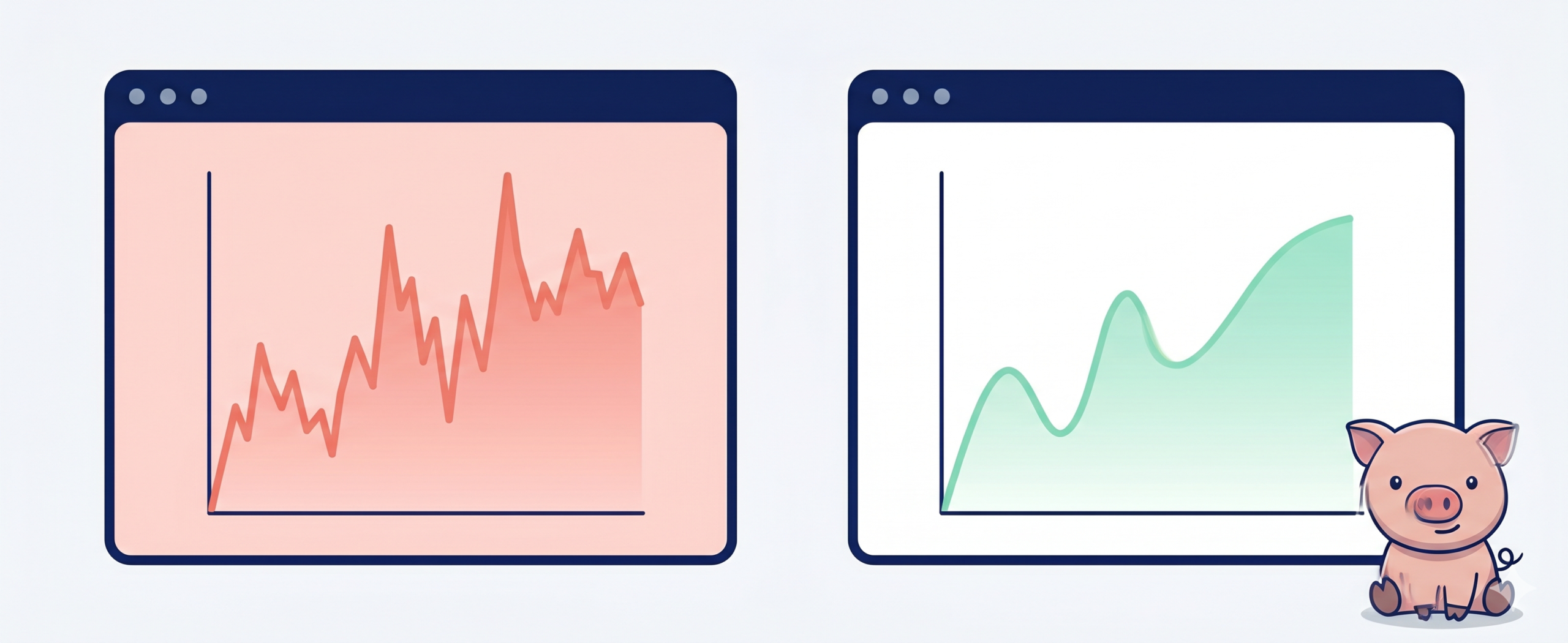
Small businesses and early-stage startups have fundamentally different observability requirements than enterprises. Budget is constrained, data teams are small (often one person), and the priority is fast time-to-value – not six-month implementation timelines.
Metaplane is the strongest recommendation for small businesses running Snowflake, BigQuery, or Redshift. It connects in under an hour, automatically detects
anomalies without threshold configuration, maps lineage through dbt to BI tools, and alerts via Slack – all at a price point accessible to teams without enterprise budgets. It does not require a dedicated observability engineer to operate.
Soda is the right choice for technically strong small teams that prefer an open-source, code-first approach. Soda Core is free. If you run dbt, Soda’s native
integration lets you define quality checks in the same repository as your transformations – no separate SaaS subscription required until you need the collaborative
Cloud features.
Both tools provide the anomaly detection, freshness monitoring, and lineage tracking a small business needs without the overhead of enterprise platforms. As data volume grows and Snowflake becomes the primary warehouse, the autonomous cost optimization approach of Seemore becomes worth evaluating – particularly once compute cost is a material budget line.
Frequently Asked Questions
1. What is data observability software?
Data observability software monitors the health, quality, and reliability of data across pipelines, warehouses, and lakes. It detects anomalies, traces lineage, surfaces root causes, and – in modern tools – controls compute costs. Enterprises use it to prevent broken dashboards, failed ML models, and runaway cloud bills. It is a proactive discipline, not a reactive alert system.
2. What’s the difference between data observability and data monitoring?
Data monitoring is rule-based and reactive – it alerts when a predefined threshold is breached. Data observability is broader: it uses ML to detect unknown unknowns (unexpected schema drift, volume drops, freshness violations) and provides lineage context to understand why something broke, not just that it broke. Observability reduces MTTD and MTTR; monitoring only reduces MTTD.
3. What is the best data observability tool for Snowflake?
Seemore Data is purpose-built for Snowflake, combining root-cause anomaly detection with autonomous warehouse optimization and continuous cost control in a single native agent. Monte Carlo and Acceldata also support Snowflake with strong lineage and quality capabilities, but focus primarily on data reliability rather than compute cost – making them less suited for teams managing Snowflake FinOps alongside observability.
4. How much does data observability software cost?
Pricing varies significantly. Open-source tools (Soda Core, Great Expectations) are free to self-host. SMB-oriented SaaS tools like Metaplane and Soda Cloud start from approximately $1,000/month. Enterprise platforms – Monte Carlo, Acceldata, Informatica, Databand – use custom pricing and commonly range from $50,000 to $300,000+ annually. Seemore Data offers a free warehouse scan to establish baseline ROI before any commitment.
5. Is data observability the same as data quality?
No. Data quality refers to the state of data – whether it is accurate, complete, consistent, and timely. Data observability is the practice of continuously
measuring and ensuring quality across an entire data ecosystem. A data quality tool validates data at a point in time; an observability platform monitors it continuously, traces issues through lineage, and surfaces root causes. Quality is the outcome; observability is the system that maintains it.
6. What are the five pillars of data observability?
The five pillars are: Freshness (is data up to date?), Volume (did the expected amount of data arrive?), Schema (did the structure of data change?),
Distribution (are values within expected ranges?), and Lineage (what is the upstream and downstream impact of a change or
failure?). Modern platforms like Seemore add a sixth pillar: Cost – is the compute required to process this data proportionate to its business value?
7. Can data observability reduce cloud data warehouse costs?
Yes – but only if the platform includes cost control as a native capability, not just quality monitoring. Standard observability tools detect anomalies and trace lineage; they do not optimize warehouse sizing, eliminate idle compute, or flag redundant pipelines. Seemore Data is purpose-built for this: its autonomous agent continuously right-sizes Snowflake warehouses, identifies usage-based pipeline inefficiencies, and surfaces data waste – directly reducing credit consumption
without manual FinOps intervention.
8. Do small businesses need data observability software?
Yes, but the right tool depends on scale. Any team relying on data for decisions – even a five-person startup – benefits from knowing when a pipeline broke or data went stale. For small businesses, Metaplane and Soda offer fast deployment, accessible pricing, and sufficient feature depth without enterprise complexity. As data volume and Snowflake costs grow, a more comprehensive platform becomes worth evaluating.
9. How does AI-powered anomaly detection work in data observability?
AI-powered anomaly detection learns the historical behavior of each data asset – volume, freshness, value distributions – and builds a statistical baseline. When new data deviates from that baseline beyond a learned threshold, it triggers an alert. Unlike rule-based monitoring (which requires engineers to predefine every threshold), ML-based detection adapts automatically to seasonality, business cycles, and evolving data patterns – catching anomalies that static rules would miss. Platforms like Seemore apply this to detect pipeline anomalies in Snowflake and immediately surface the root cause without manual triage.
10. What’s the difference between Monte Carlo and Seemore Data?
Monte Carlo is a data reliability platform optimized for lineage depth and enterprise-scale anomaly detection across heterogeneous stacks (Snowflake, Databricks, BigQuery, Airflow). It excels at helping large teams understand the impact of data failures across complex pipelines. Seemore Data is a Snowflake-native autonomous agent that combines observability with active cost control – it not only detects anomalies but autonomously remediates compute inefficiencies. If your primary stack is Snowflake and you need both pipeline reliability and FinOps in one agent, Seemore is the stronger fit. If you need deep cross-system lineage across multiple warehouses and BI tools, Monte Carlo leads.
Still unsure which tool fits your stack? Book a demo and we’ll map your Snowflake environment to the right solution in under 30 minutes.
Choosing the Right Data Observability Platform
The right data observability tool depends on three variables: your primary warehouse, your team size, and whether cost control is a first-class requirement alongside quality monitoring.
If you run Snowflake and need anomaly detection, root-cause analysis, and autonomous cost optimization in a single platform, Seemore Data is the purpose-built choice. If you run a complex enterprise stack across multiple warehouses and need deep lineage, Monte Carlo is the strongest fit. For multi-layer infrastructure visibility during a migration, Acceldata leads. SMBs and startups get the fastest time-to-value from Metaplane or Soda. Teams in regulated industries requiring governance and audit trails should evaluate Informatica CDGC.
The tools that will define this category through 2026 and beyond are those that close the loop – not just detecting what broke, but autonomously fixing the conditions that cause it.
